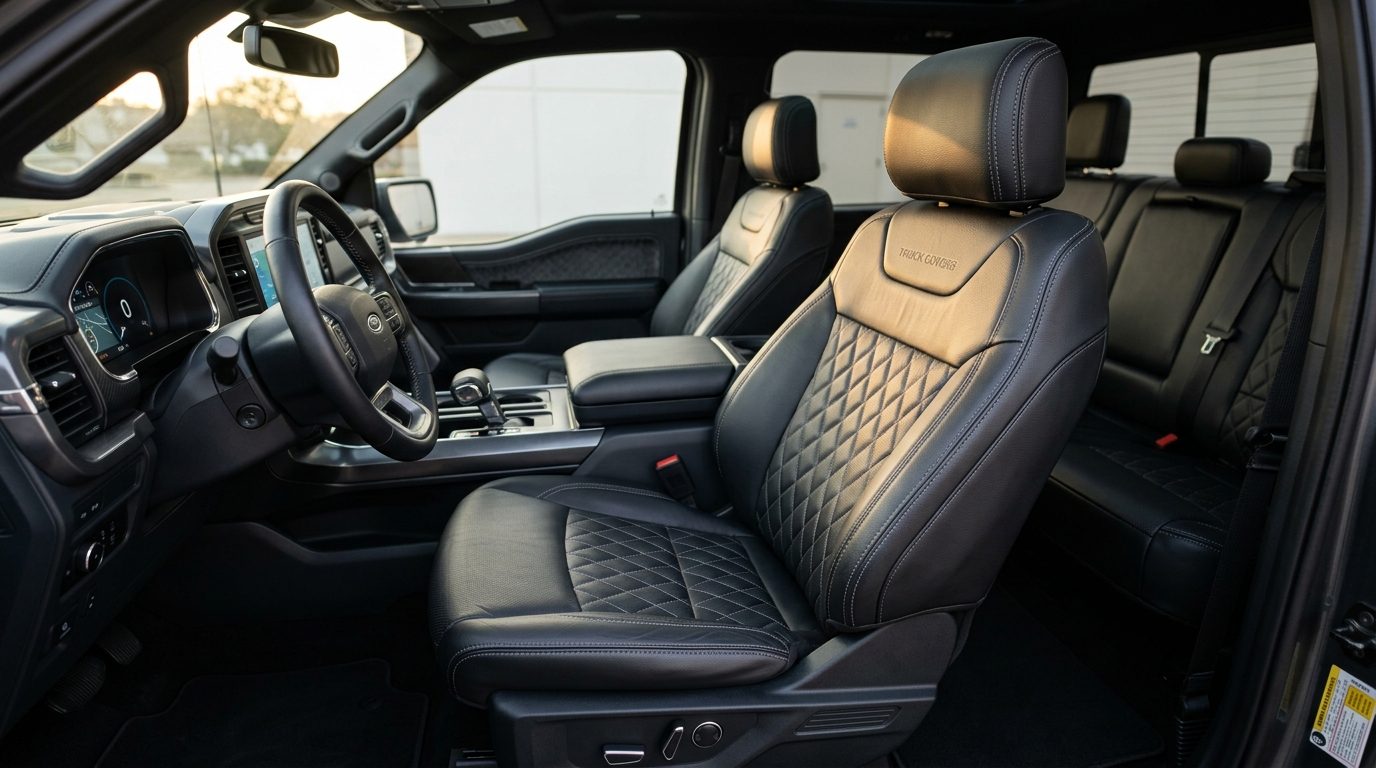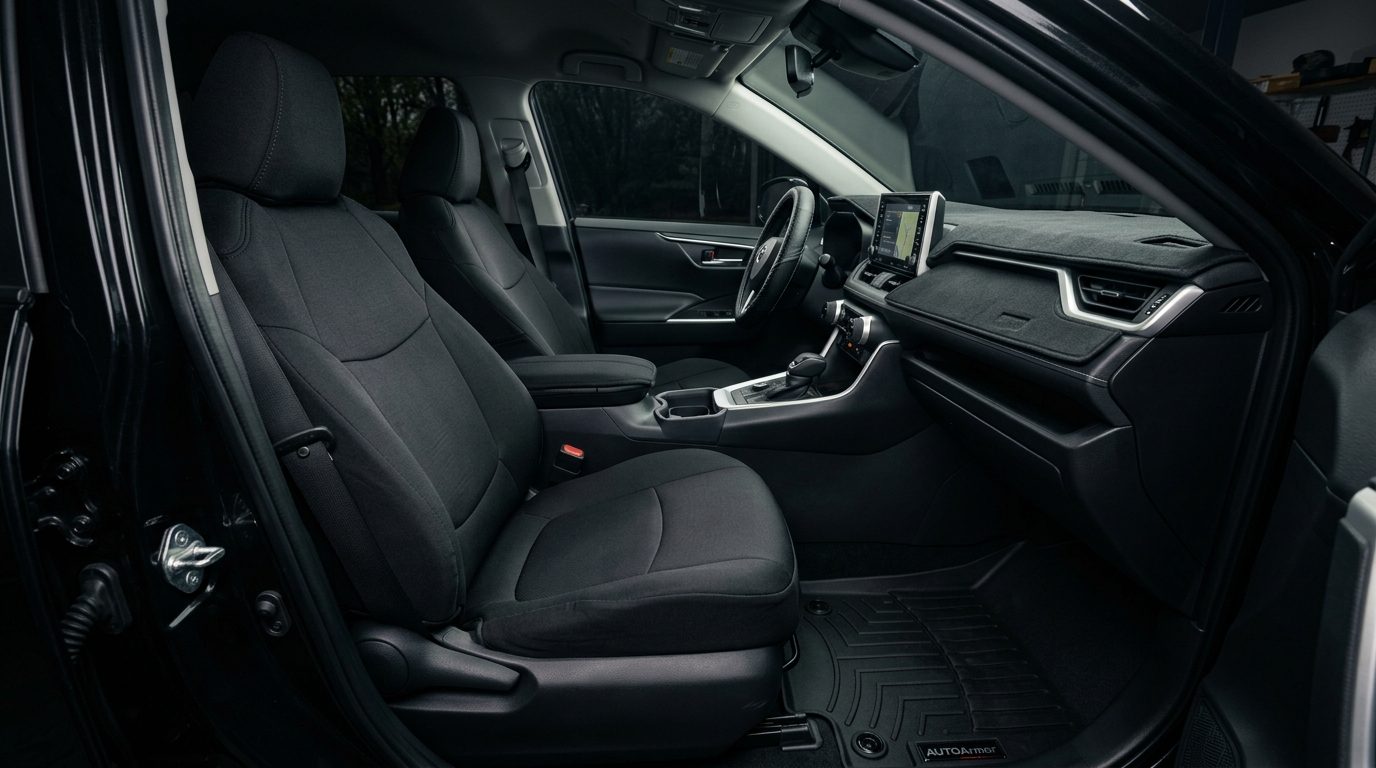
Floor mats and liners are the unsung heroes of vehicle protection. While seat covers and dash covers get more attention, your floor takes the brunt of daily abuse — muddy boots, spilled coffee, road salt, rain, snow, and whatever else you track in. The right floor mats can mean the difference between a pristine interior and permanent stains that kill your resale value. In this guide, we break down everything you need to know to choose the best floor protection for your truck, SUV, or car.
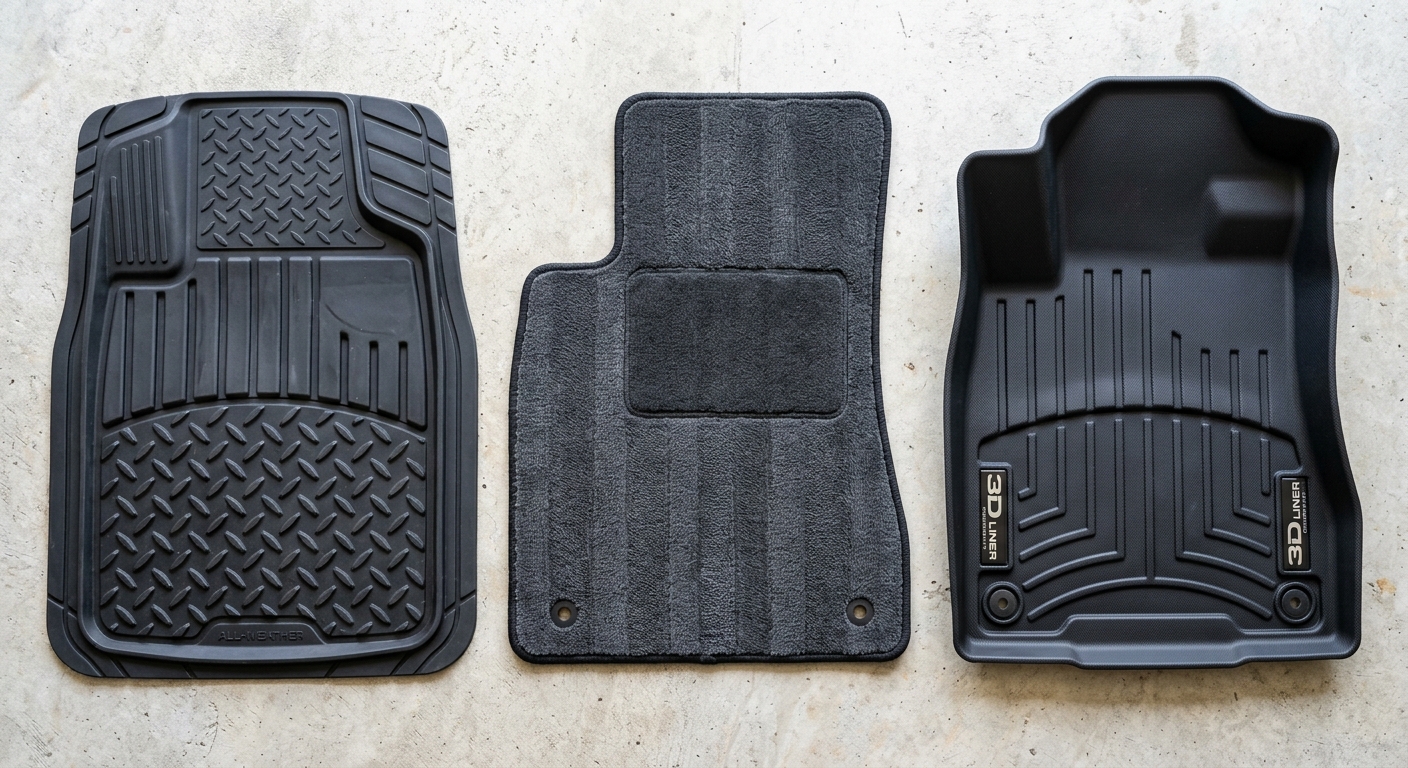
From left to right: rubber all-weather mat, carpet mat, and 3D laser-measured thermoplastic liner.
Floor Mats vs. Floor Liners: Understanding the Difference
These terms are often used interchangeably, but they refer to distinctly different products:
Floor mats are flat, rectangular mats that sit on top of your vehicle's carpet. They cover the primary foot area but do not extend up the sides. Mats are typically made from rubber, carpet, or all-weather composite materials. They are affordable, easy to remove and clean, and available in universal or semi-custom sizes.
Floor liners are custom-molded to the exact shape of your vehicle's floor pan. They extend up the sides — sometimes several inches — creating a containment wall that traps liquids, mud, and debris before they reach your carpet. Liners are typically made from thermoplastic or rubberized materials and are vehicle-specific.
For maximum protection, floor liners are the superior choice. The raised edges contain spills that would otherwise soak into your carpet and padding, potentially causing mold and odor. However, quality floor mats are still a significant upgrade over the thin paper mats that come with many vehicles.
Types of Floor Mats and Liners
All-Weather Rubber Mats
Rubber floor mats are the workhorse of vehicle floor protection. They are thick, durable, and designed to handle the toughest conditions — mud, snow, rain, road salt, and sand. The rubber construction is naturally waterproof and easy to clean: simply pull them out, hose them down, and put them back.
Quality rubber mats feature deep grooves and channels that trap water and direct it away from your feet. Look for mats with a textured surface that provides grip even when wet. The best options have anti-slip backing or factory retention hooks to keep them securely in place.
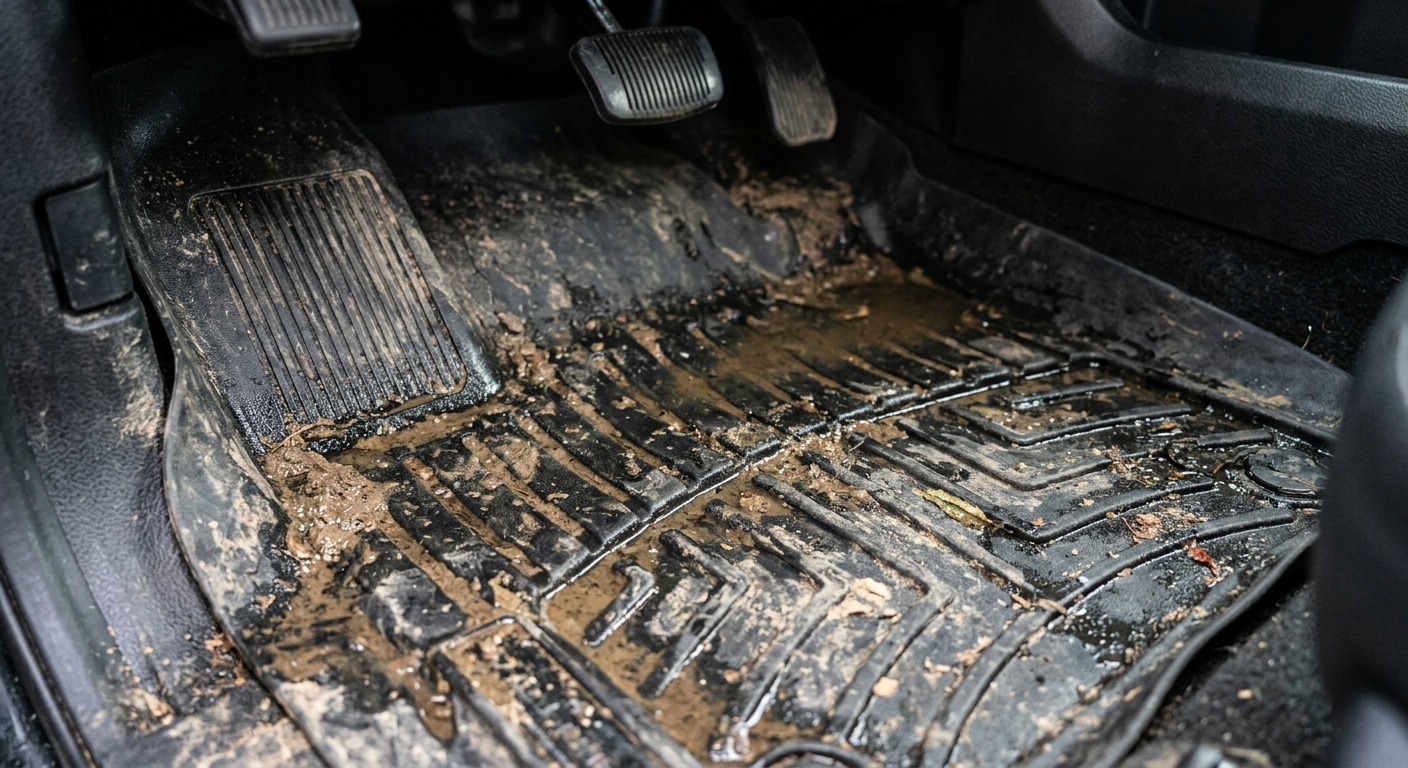
Raised edges on all-weather liners contain spills and mud, preventing them from reaching the carpet.
3D Laser-Measured Thermoplastic Liners
These represent the pinnacle of floor protection. Using 3D laser scanning technology, manufacturers create liners that match every contour of your vehicle's floor — including the transmission tunnel, footrest, and side walls. The result is complete coverage with no gaps where dirt and water can sneak through.
Thermoplastic elastomer (TPE) is the most common material for these liners. It is flexible, odorless, and performs well in extreme temperatures — it will not crack in sub-zero cold or warp in desert heat. The material is also fully recyclable and environmentally friendly.
The key advantage of 3D laser-measured liners is their raised lip, which can hold an impressive amount of liquid. If you spill a full cup of coffee, the liner contains it completely. No soaking into the carpet, no staining, no lingering smell.
Carpet Floor Mats
Carpet mats offer a more refined, OEM-style appearance. They are typically made from nylon or polypropylene fiber and come in colors that match or complement your interior. Carpet mats are ideal for dry climates and daily commuters who want a clean, comfortable look without the industrial appearance of rubber.
Many carpet mats feature a rubberized backing to prevent slipping and protect the underlying carpet from moisture. Some include heavy-duty heel pads in the driver's position to handle the constant friction of accelerating and braking.
The downside of carpet mats is maintenance. They absorb liquids, hold onto dirt, and require regular vacuuming and periodic shampooing. They are not suitable for work vehicles, outdoor enthusiasts, or anyone who frequently deals with wet or muddy conditions.
Hybrid Mats
Some manufacturers offer hybrid designs that combine a carpeted center with rubber borders. These mats attempt to deliver the comfort of carpet with the protection of rubber. They are a reasonable compromise for drivers who want some of both worlds, though they do not excel at either extreme.
What to Look For When Buying Floor Mats
Not all floor mats are created equal. Here are the key factors to evaluate:
Vehicle-Specific Fit
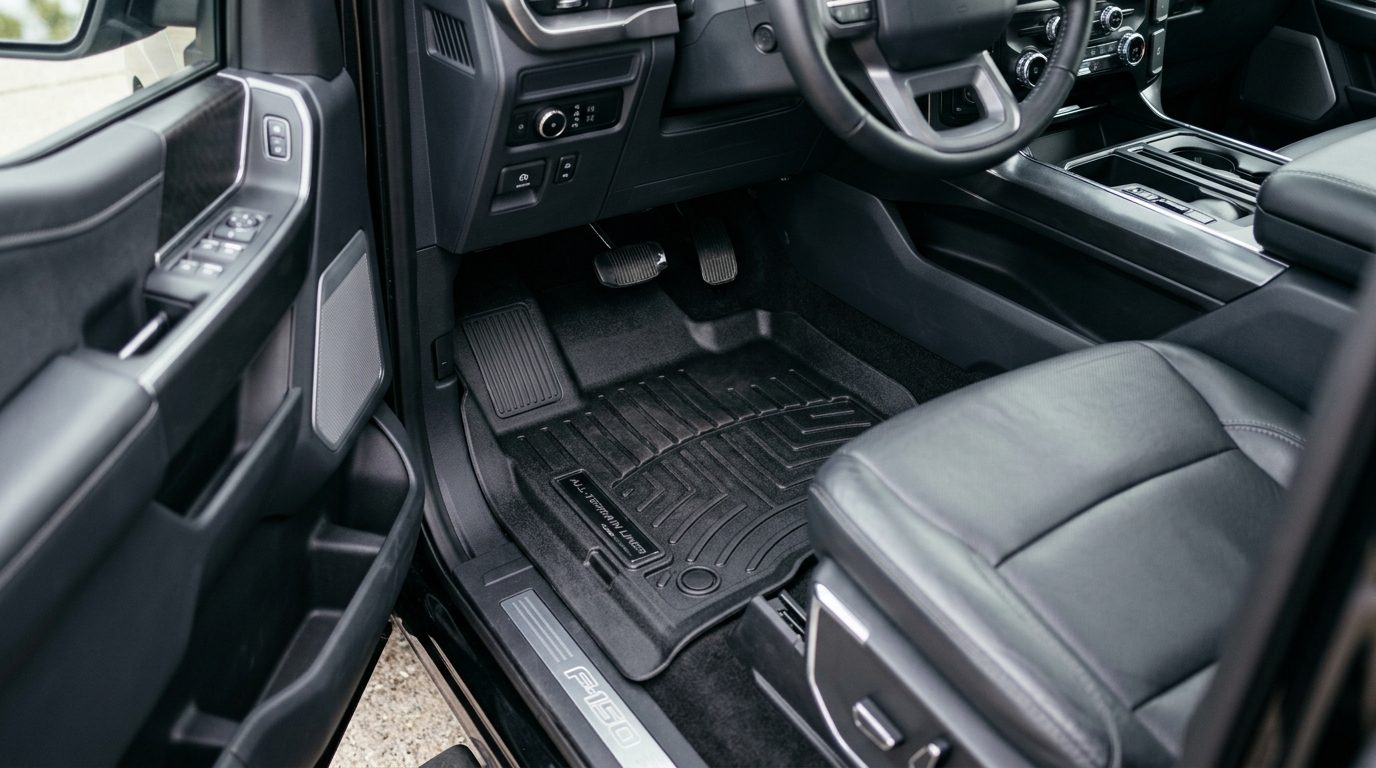
The most important factor is fit. A mat that is too small leaves carpet exposed. A mat that is too large can interfere with pedals — a serious safety hazard. Custom-fit and laser-measured liners are designed for specific makes, models, and years, ensuring complete coverage without any interference.
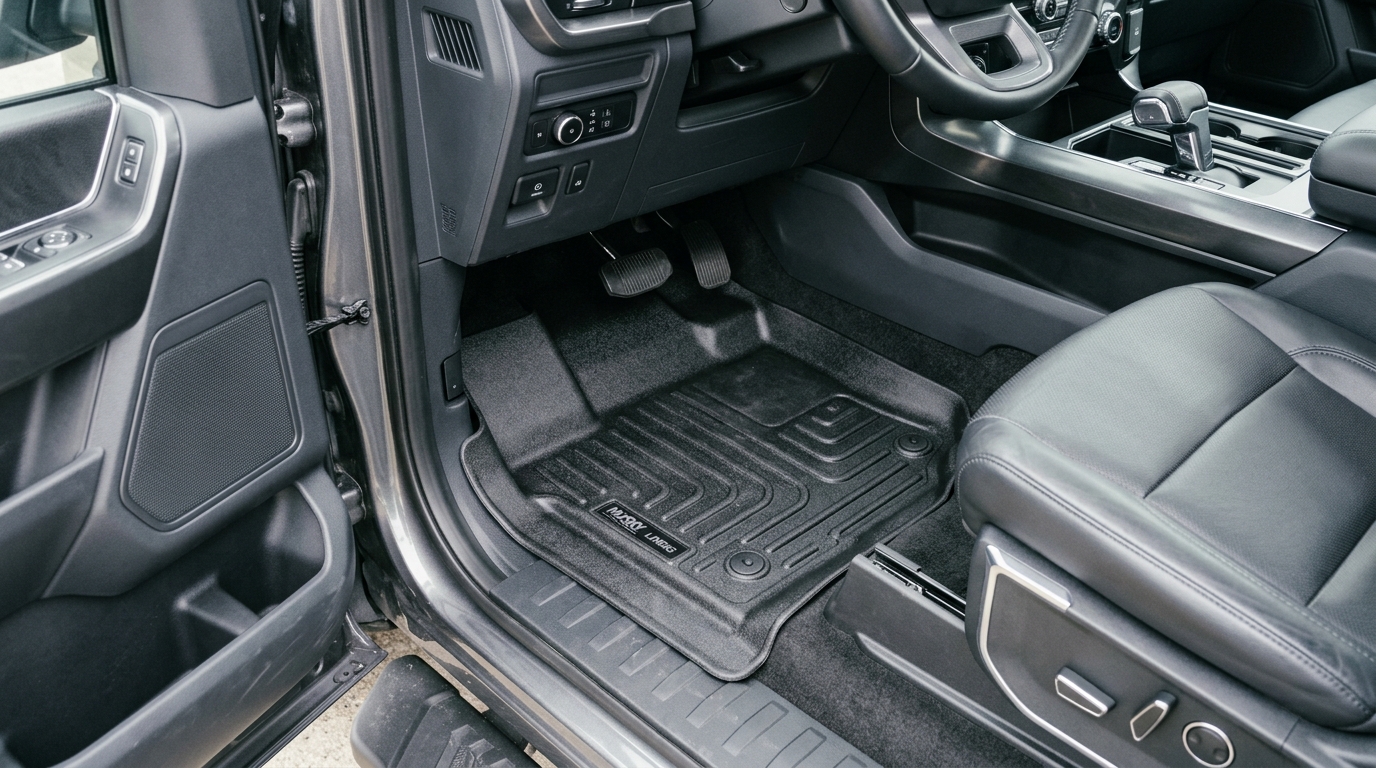
Custom-fit floor liners provide complete coverage of the truck footwell, including the transmission tunnel and footrest.
Retention System
A floor mat that slides around is dangerous and ineffective. Look for mats that use your vehicle's factory retention hooks or include their own anchoring system. Quality mats have grippy undersides that hold them in place even on smooth carpet.
Material Durability
Floor mats take constant abuse. The material should be thick enough to resist wear but flexible enough to conform to the floor. Thermoplastic and heavy-duty rubber are the most durable options. Avoid thin, flimsy mats that will crack or deform within months.
Containment Capacity
If you live in an area with rain, snow, or mud, containment is critical. Look for liners with raised edges of at least 1 inch. The deeper the containment wall, the more liquid the liner can hold before overflowing onto your carpet.
Ease of Cleaning
You will be cleaning your floor mats regularly, so make sure the process is simple. Rubber and thermoplastic liners can be removed, hosed off, and replaced in minutes. Carpet mats require vacuuming and occasional shampooing — a more time-consuming process.
Floor Mats for Different Vehicle Types
Trucks
Truck owners need maximum protection. Work trucks haul gear, construction materials, and equipment that tracks in dirt and debris. Off-road trucks deal with mud, water, and sand. For trucks, 3D laser-measured thermoplastic liners are the best choice — they offer complete coverage and can handle the heaviest abuse.
SUVs and Family Vehicles
SUVs and minivans face a different challenge: kids, pets, and daily messes. Spilled drinks, dropped snacks, and muddy cleats are constant threats. All-weather rubber mats or thermoplastic liners are ideal. For the third row, look for one-piece liners that cover the entire floor area.
Sedans and Commuter Cars
Daily commuters may not need industrial-grade protection, but they still benefit from quality mats. Carpet mats offer a clean, professional look for dry climates. In wetter regions, a set of all-weather rubber mats provides peace of mind during rainy seasons.
Installation and Maintenance
Installing floor mats and liners is simple. Remove the old mats, clean the floor area, and place the new mats or liners into position. If your vehicle has factory retention hooks, thread them through the designated holes on the mat. Press down to ensure the mat sits flat and secure.
For maintenance, remove the mats monthly (or more often in bad weather) and clean them thoroughly. Rubber and thermoplastic liners can be washed with soap and water — use a brush for stubborn dirt. Carpet mats should be vacuumed weekly and deep-cleaned every few months. Always let mats dry completely before reinstalling to prevent moisture buildup underneath.
Floor Mat Maintenance by Season
Different seasons demand different maintenance routines for your floor mats and liners. Understanding these seasonal needs ensures your mats perform optimally year-round and last longer.
Spring and Summer
Warmer months bring dust, pollen, and occasional rain. Vacuum your mats weekly to remove fine particles that can scratch surfaces. If you live in a coastal area, salt air can leave a residue on rubber and thermoplastic mats — rinse them with fresh water every two weeks. For carpet mats, treat any pollen stains promptly with a fabric cleaner before they set permanently.
Fall and Winter
Cold weather is the harshest season for floor mats. Road salt, slush, snow, and mud create a corrosive mixture that can damage both your mats and the underlying carpet. Remove and clean your liners at least twice a month during winter. For rubber and thermoplastic liners, use warm water with mild soap — never use hot water on freezing-cold liners, as the temperature shock can cause cracking. Dry thoroughly before reinstalling.
If you live in an area with heavy snowfall, consider keeping a second set of mats for winter use. Swap them out when the season changes, giving your primary mats a chance to dry and recover. This rotation extends the life of both sets significantly.
Conclusion
Floor mats and liners are a small investment that pays off enormously in preserving your vehicle's interior. Whether you choose rugged all-weather rubber mats, precision 3D laser-measured thermoplastic liners, or refined carpet mats, the key is selecting a product that fits your vehicle precisely and matches your lifestyle. For trucks and outdoor enthusiasts, thermoplastic liners offer unmatched protection. For daily commuters in dry climates, carpet mats provide a clean, comfortable look. Whatever you choose, quality floor protection keeps your interior looking new and your resale value high — making it one of the smartest accessory purchases you can make.